
Standard Lightning Protection

Thailand (EIT) & French (NF C 17-102) Standards

Comprehensive Technical Specifications & Engineering Standards: Thailand (EIT 2003-51 / 2003-64, TIS 1588) & France (NF C 17-102:2011) Lightning Protection Systems - LPS France Licensed Exclusive Agency

🇹🇭

Thailand Lightning Protection Standards

EIT 2003-51 / 2003-64 & TIS 1588

The Engineering Institute of Thailand (EIT) establishes building lightning protection standards based on the international engineering framework of IEC 62305.

  • Lightning Protection Levels (LPL): Classified into Class I, II, III, and IV.
  • Design Methods: Protective Angle, Rolling Sphere, and Mesh Method.
  • Earth Termination System: Target ground resistance ≤ 5 Ω (maximum not exceeding 10 Ω).
  • Down Conductors: Distributed perimeter routing with at least 2 distinct paths.
🇫🇷

French Lightning Protection Standards

NF C 17-102 (Edition 2011) & LPS France

French National Standard NF C 17-102 governs the testing, calculation, and installation of Early Streamer Emission (E.S.E.) lightning air terminals.

  • Early Streamer Technology: Creates an early upward leader to protect broad areas.
  • Advance Time Δt: Certified in high-voltage laboratories (10, 25, 45, 60 μs).
  • Lightning Current Testing: Proven withstand against 100 kA (10/350 μs) impulses.
  • Smart Remote Diagnostics: IoT Contact@ir® System and Compt@ir® strike counters.

Engineering Implementation Guidelines for Thailand

Synthesizing local safety requirements with certified international ESE air terminal technologies

In modern engineering practice across Thailand, commercial buildings, industrial factories, warehouses, and critical infrastructure typically implement earth grounding and surge protection according to EIT / IEC 62305, while utilizing Early Streamer Emission (ESE) air terminals certified to NF C 17-102. This hybrid approach delivers maximum protection radius, minimizes roof penetrations, and enables continuous 24/7 IoT diagnostic monitoring.

🇹🇭

Thailand Lightning Protection Standard EIT 2003-51 / 2003-64

Engineering Standard by the Engineering Institute of Thailand Under H.M. The King's Patronage (EIT)

1. Lightning Protection Levels (LPL)

The EIT standard classifies lightning protection safety into 4 levels based on risk assessment calculations that evaluate the physical dimensions, height, environmental location, and occupancy of the facility:

LPL Level Protection Efficiency (Ei) Rolling Sphere Radius (r) Mesh Size Recommended Structures
Class I 98% 20 meters 5 × 5 meters Oil refineries, chemical processing plants, explosive & munitions storage
Class II 95% 30 meters 10 × 10 meters Hospitals, data centers, telecommunication switching centers
Class III 90% 45 meters 15 × 15 meters Commercial offices, educational institutions, hotels, residential condominiums
Class IV 80% 60 meters 20 × 20 meters Standard warehouses, open storage buildings with non-combustible contents

2. Air-Termination Placement Methods

Protective Angle Method

Utilizes the slope angle of a conical protection zone generated from the tip of the rod; best suited for simple geometric structures or buildings of modest height.

Rolling Sphere Method

Simulates an imaginary sphere of radius r rolled over and around the structure; wherever the sphere touches the building, air-termination conductors must be installed.

Mesh Method

Arranges a grid network of copper or aluminium conductors across the entire roof surface with grid dimensions conforming to the assigned LPL class.

3. Grounding System & Surge Protective Devices (Earthing & SPD)

  • Ground Resistance: Must maintain a resistance to earth not exceeding 5 Ω (recommended standard) or 10 Ω maximum to ensure rapid dissipation of discharge currents without back-flashover.
  • Equipotential Bonding: Requires interconnected bonding between structural metal frameworks, metal plumbing, and electrical earthing systems to eliminate dangerous potential differences.
  • Surge Protective Devices (SPD): Mandates SPD Type 1 at the Main Distribution Board (MDB) and SPD Type 2 at branch panels (DB) to prevent catastrophic overvoltage damage to sensitive electronic systems.
🇫🇷

French National Standard NF C 17-102 (Edition 2011)

Protection contre la foudre - Systèmes de protection contre la foudre à dispositif d'amorçage (AFNOR)

1. Operating Principle of Early Streamer Emission (ESE) Air Terminals

Standard NF C 17-102 establishes strict qualification criteria for Early Streamer Emission (ESE) lightning conductors. When ambient atmospheric electrostatic fields surge prior to a strike, an ESE air terminal initiates an early upward leader ahead of conventional lightning rods, intercepting the downward stepped leader earlier and at a greater distance. This expands the protective radius significantly over surrounding structures.

Protection Radius Formula (NF C 17-102 Annex B):
Rp(h) = √[ 2rh - h² + ΔL(2r + ΔL) ]   (for h ≥ 5 m)
  • Rp(h): Effective protection radius at height h above the protected plane.
  • h: Height of the ESE tip above the horizontal surface to be protected (h ≥ 2 m).
  • r: Rolling sphere radius per safety class (r = 20m for Class I, 30m for Class II, 45m for Class III, 60m for Class IV).
  • ΔL: Early streamer emission distance gain, where ΔL = Δt × 10&sup6; m/s (streamer propagation velocity v = 1 m/μs; maximum Δt capped at 60 μs).

2. Paraton@ir® Series & Certified Advance Levels (LPS France)

Product Model Advance Trigger Time (Δt) ΔL Distance Gain Protection Radius at h=5m (Class I) Protection Radius at h=5m (Class IV) IoT Connectivity
Paraton@ir® 10 10 μs 10 meters 31 meters 53 meters Contact@ir® Ready
Paraton@ir® 25 25 μs 25 meters 47 meters 77 meters Contact@ir® Ready
Paraton@ir® 45 45 μs 45 meters 65 meters 98 meters Contact@ir® Ready
Paraton@ir® 60 60 μs 60 meters 79 meters 109 meters (Up to 120m) Contact@ir® Ready

3. Electrical & Environmental Laboratory Withstand Testing

100 kA Lightning Current Withstand

Certified by accredited independent high-voltage laboratories subjected to repeated 100 kA (10/350 μs) heavy lightning current impulses without mechanical or electrical degradation.

Severe Environmental Testing

Validated through extensive salt-spray corrosion chamber testing and sulfur dioxide (SO2) humid atmosphere exposure, ensuring flawless longevity in coastal or heavy chemical environments.

Engineering Comparison Matrix: Thai Standard (EIT) vs French Standard (NF C 17-102)

Comprehensive evaluation of protection radius, architectural impact, installation efficiency, and lifecycle costs
Comparison Criteria Thai Standard (EIT / IEC 62305) French Standard (NF C 17-102 / LPS France)
Air Terminal Technology Conventional passive Franklin rods or Faraday meshed cage network Early Streamer Emission (ESE) air terminals (Paraton@ir® & Ellips®)
Coverage Radius & Area Limited by narrow protective angles (15° - 45°) or rolling sphere rolling contact (20m - 60m) Broad protection radius up to 120 meters per air terminal, shielding entire site footprint
Quantity of Terminals on Roof Requires dense forest of passive rods and interconnected grid mesh lines Requires only 1 to 2 terminals to fully safeguard large industrial or commercial facilities
Roof Structural Penetrations Numerous anchor penetrations across roof surfaces, elevating risk of long-term water leaks Reduces roof penetrations by over 80%; elevated mast mounting preserves roof integrity
Architectural Aesthetics Visible copper conductors and prominent rods disrupting building aesthetics Sleek, aerodynamic design harmonizing with high-end modern architectural aesthetics
Inspection & Diagnostics Requires hazardous rooftop climbing and manual physical measurement at every conductor point Ground-level wireless diagnostics via IoT Contact@ir® and Compt@ir® smart counters
Required Earth Resistance ≤ 5 Ω (maximum allowable ≤ 10 Ω) ≤ 10 Ω (≤ 5 Ω strongly recommended for optimal performance)
Total Cost of Ownership (TCO) Substantial expenditure on heavy copper conductors, installation labor, and roof leak repairs Significantly more cost-effective with reduced materials, rapid installation, and minimal upkeep

Technical Specifications & Standards Documents

Official LPS France technical datasheets, certification certificates, and standard brochures
Paraton@ir® 60 Technical Specification
EN-10004-P60 (NF C 17-102 Certified)
Download
Paraton@ir® 45 Technical Specification
EN-10003-P45 (NF C 17-102 Certified)
Download
Paraton@ir® 25 Technical Specification
EN-10002-P25 (NF C 17-102 Certified)
Download
Paraton@ir® 10 Technical Specification
EN-10001-P10 (NF C 17-102 Certified)
Download
Compt@ir® Digital Counter Specification
EN-43603-CPT (Communicating Strike Counter)
Download
Alert@ir® XT Strike Counter Specification
EN-50014-AXT (IoT Ready Strike Counter)
Download
Looking for certified design consultation under EIT or NF C 17-102 standards?
DEECO TECHNIC's specialist engineering team provides technical advisory, site risk assessment calculations, and comprehensive lightning protection system design for your project. Contact us today
Image Lightning Risk Error

Lightning Risk


Lightning can ignite fires, destroy structures, fry electronics, disrupt communications, and threaten lives. Installing air terminals, surge protection, and equipotential bonding is essential to protect people, property, and operations—and to comply with safety standards.

Read More
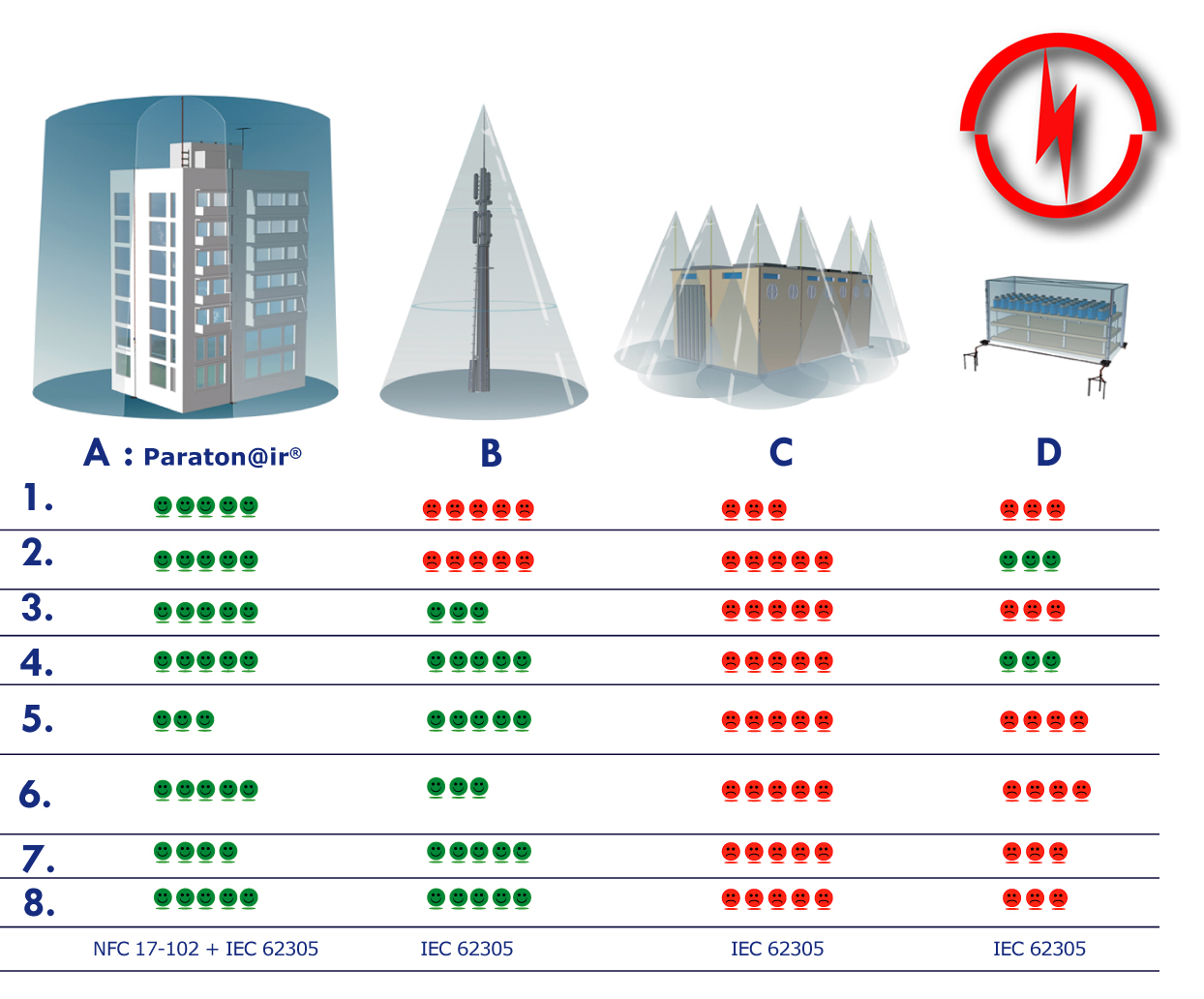
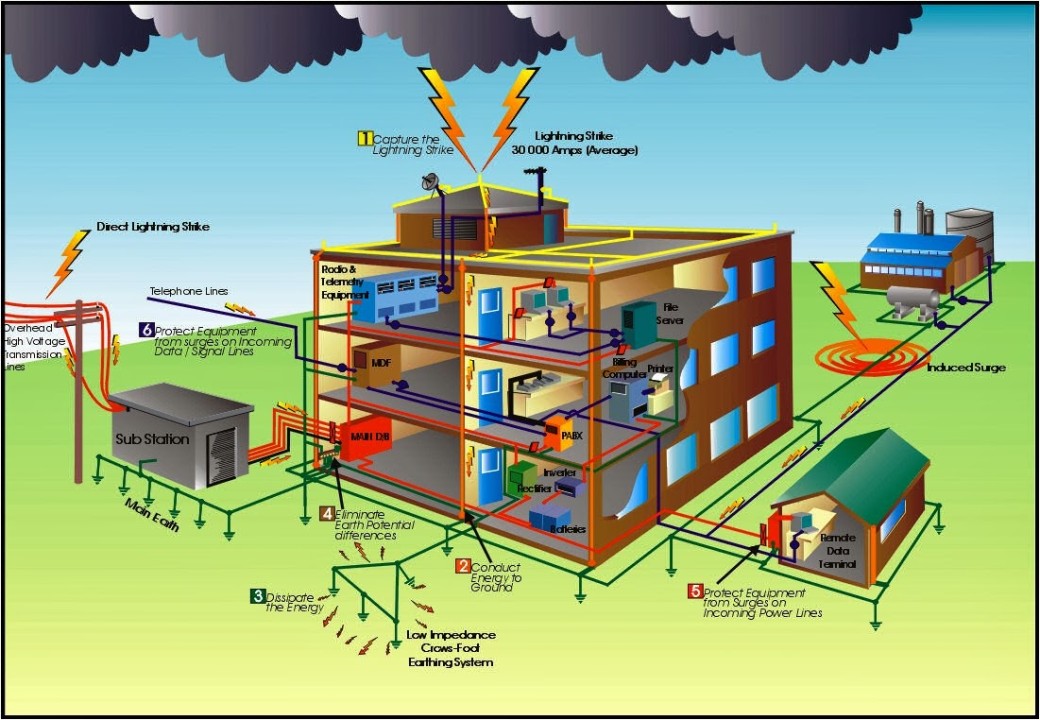
Image Lightning Desc Error

Lightning Desc


Lightning Desc is a field for recording a description of a lightning event, including date & time, location, type, estimated current, and impact, used to track and prevent future lightning hazards.

Read More
Image Lightning Protection Error

Lightning Protection


A lightning conductor protects a structure from direct lightning strikes. The conductor is installed externally at the highest point of the structure and serves to intercept strikes that might hit it directly.

Read More
Image Standard Lightning Protection Error

Standard Lightning Protection


Engineering standards for lightning protection systems: Thailand EIT (2003-51 / 2003-64, TIS 1588) and French NF C 17-102:2011 for Early Streamer Emission (ESE) air terminals by LPS France.

Read More

Design & Install Lightning Protection Under Highest Safety Standards

Ensure world-class safety with 100% Made-in-France LPS France products backed by authorized warranty and professional engineering verification by DEECO TECHNIC.

Select Language

English English
EN ✓
Thai ภาษาไทย
TH ✓
French Français
FR ✓

Select Theme

Light
Dark
System