Lightning Risk

Lightning strike, permanent danger

Hazards & Essential Protection

Lightning poses many dangers and can cause severe consequences (spectacular damage, fires, destruction, explosions, death, etc.).

To protect against these hazards, implementing a lightning protection system is required.
A complete lightning protection system consists of:
  • Outdoor Lightning Conductor:
    An outdoor lightning conductor (air terminal) installation to protect against direct lightning strikes.
  • Indoor Surge Protection (SPD):
    An indoor surge protection installation to guard against indirect lightning effects.
  • Equipotential Bonding:
    Equipotential bonding connections to equalize potential and ensure comprehensive protection.
Lightning Risk
Image Lightning Risk Error

Lightning Risk


Lightning can ignite fires, destroy structures, fry electronics, disrupt communications, and threaten lives. Installing air terminals, surge protection, and equipotential bonding is essential to protect people, property, and operations—and to comply with safety standards.

Read More
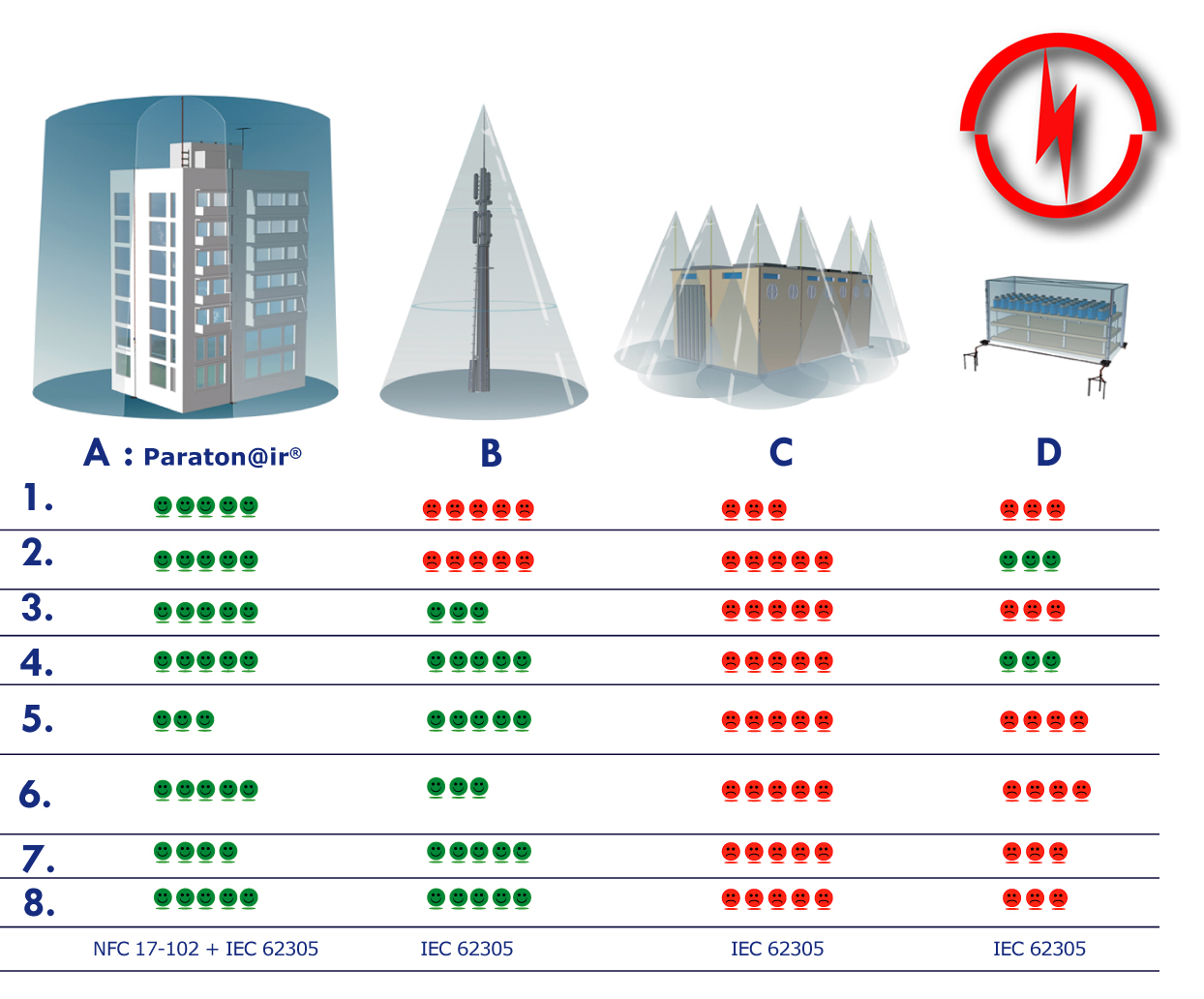
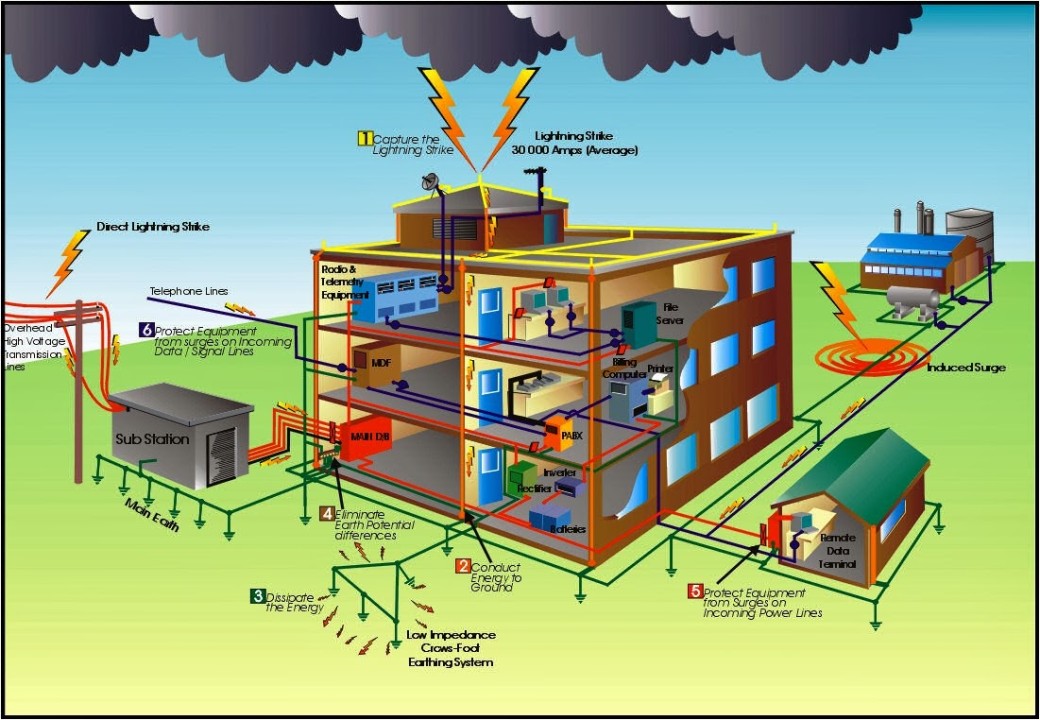
Image Lightning Desc Error

Lightning Desc


Lightning Desc is a field for recording a description of a lightning event, including date & time, location, type, estimated current, and impact, used to track and prevent future lightning hazards.

Read More
Image Lightning Protection Error

Lightning Protection


A lightning conductor protects a structure from direct lightning strikes. The conductor is installed externally at the highest point of the structure and serves to intercept strikes that might hit it directly.

Read More
Image Standard Lightning Protection Error

Standard Lightning Protection


Engineering standards for lightning protection systems: Thailand EIT (2003-51 / 2003-64, TIS 1588) and French NF C 17-102:2011 for Early Streamer Emission (ESE) air terminals by LPS France.

Read More

Select Language

English English
EN ✓
Thai ภาษาไทย
TH ✓
French Français
FR ✓

Select Theme

Light
Dark
System