Lightning phenomenon

What is Lightning Phenomenon?

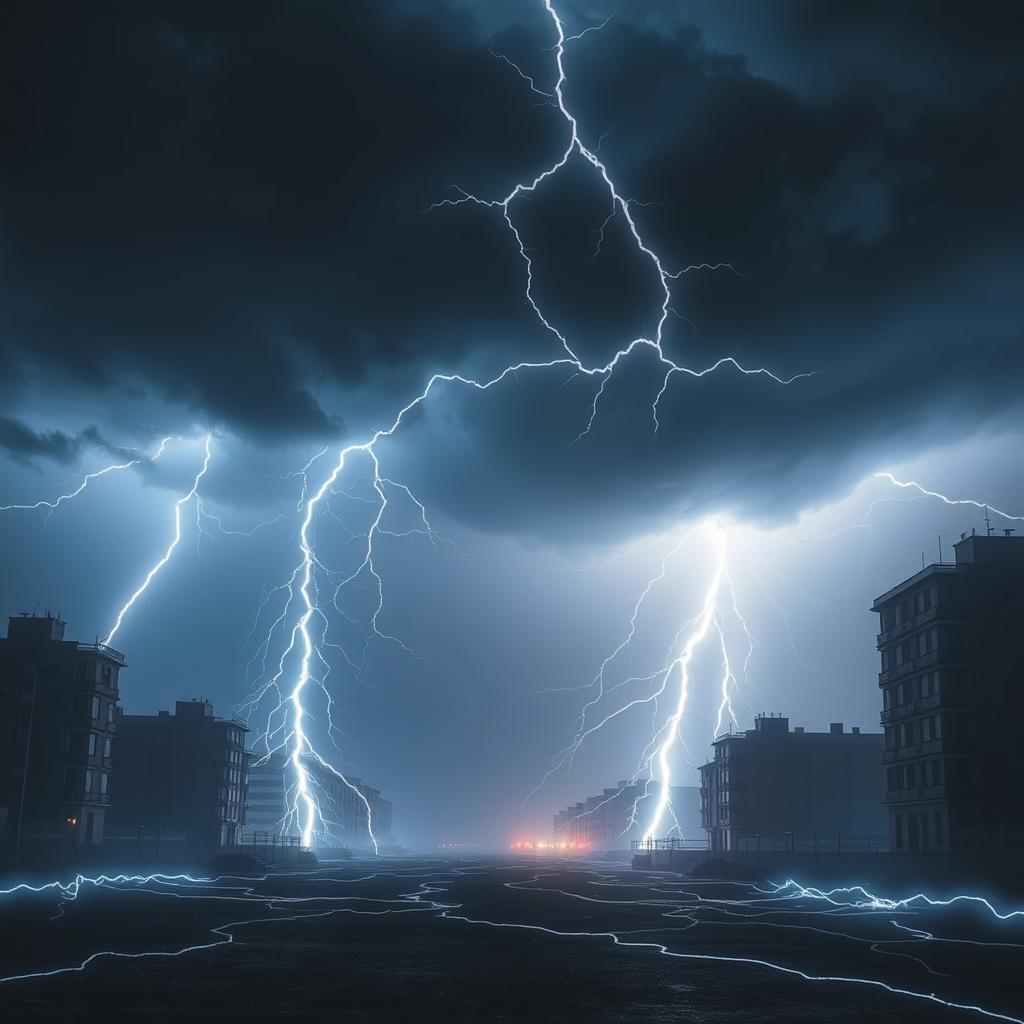
Lightning Phenomenon is a massive atmospheric electrostatic discharge that balances electrical potential differences, occurring primarily within thunderstorm clouds (Cumulonimbus).

This natural phenomenon involves extreme electrical energy, generating massive current surges, rapid thermal expansion resulting in thunder, and high electromagnetic radiation that poses severe risks to structures, electrical systems, and human life.

Lightning Phenomenon

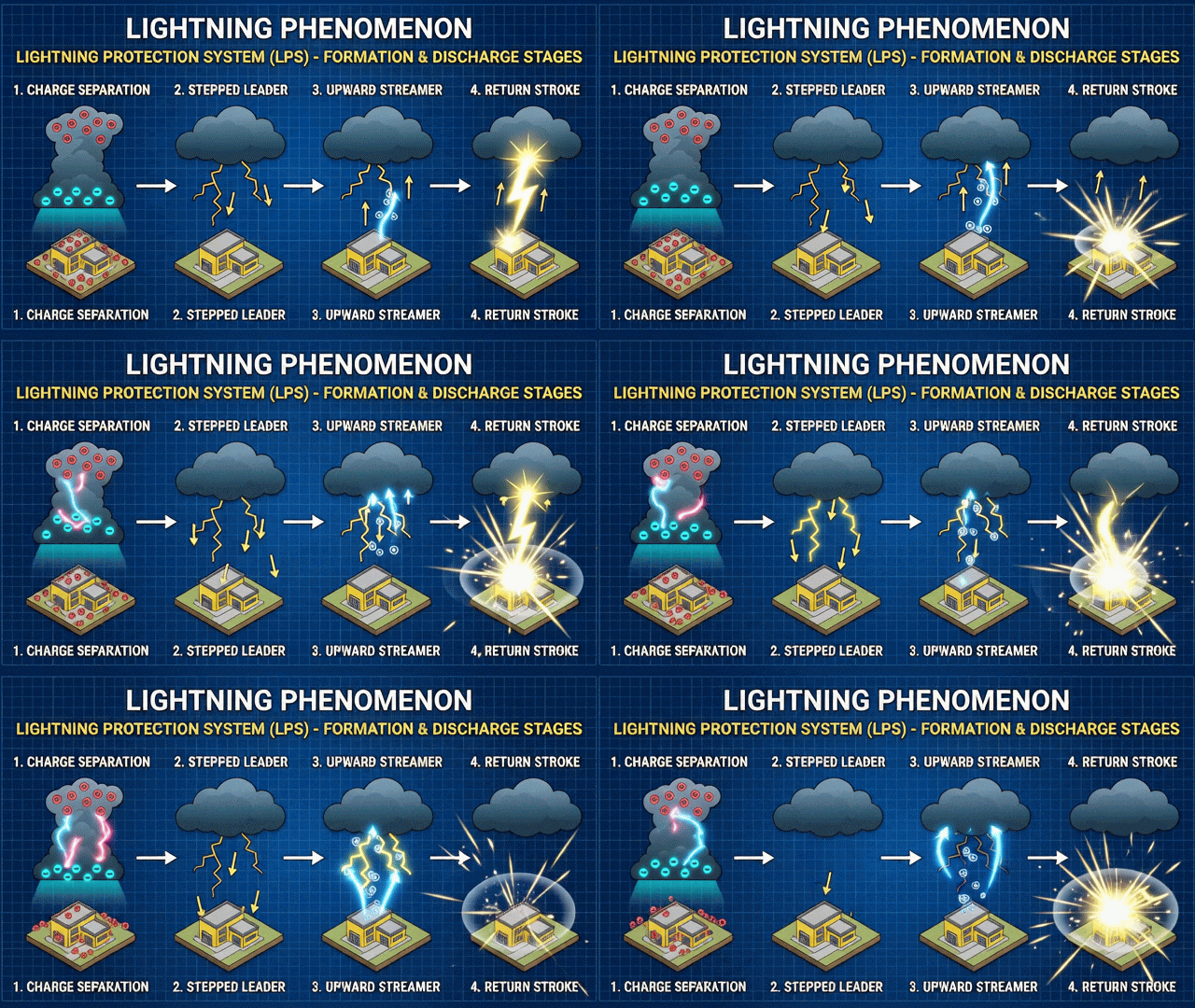
Cloud-to-Ground Discharge Sequence (4 Steps)

Step 1
Charge Separation

Air currents inside the cloud cause ice crystals and graupel to collide, accumulating positive charges (+) at the top and negative charges (-) at the cloud base, which induces positive charges (+) on the ground below.

Step 2
Stepped Leader

Once the potential difference exceeds the breakdown voltage of air, negative charges descend from the cloud base in discrete steps.

Step 3
Upward Streamer

Tall objects or high points on the ground emit an upward positive streamer to connect once within the striking distance.

Step 4
Return Stroke

As soon as the channel completes, a massive electrical current surges back upward, producing an intense flash and often repeating along the same ionized path within milliseconds.

Main Types

Intra-Cloud & Cloud-to-Cloud (IC / CC)

Most common type, accounting for approximately 75–80% of all lightning occurrences.

Cloud-to-Ground (CG)

Accounts for 20–25%; poses the highest risk to life, structures, and property.

  • Negative (-CG): ~90% of ground strikes.
  • Positive (+CG): ~10% — rarer, but carries significantly higher peak currents, strikes further away, and presents a much greater fire hazard.

Key Parameters & Impacts

Energy & Physics

Average peak current of ~30 kA (up to 200 kA), tens of millions of volts, and channel temperatures around 30,000 °C, causing explosive air expansion that produces thunder.

Damage & Hazards

Thermal melting and fire ignition, Lightning Electromagnetic Impulse (LEMP / Surge) inducing dangerous overvoltages into electrical and electronic systems, and hazardous Step & Touch Voltages around the strike point.

Image Lightning Risk Error

Lightning Risk


Lightning can ignite fires, destroy structures, fry electronics, disrupt communications, and threaten lives. Installing air terminals, surge protection, and equipotential bonding is essential to protect people, property, and operations—and to comply with safety standards.

Read More
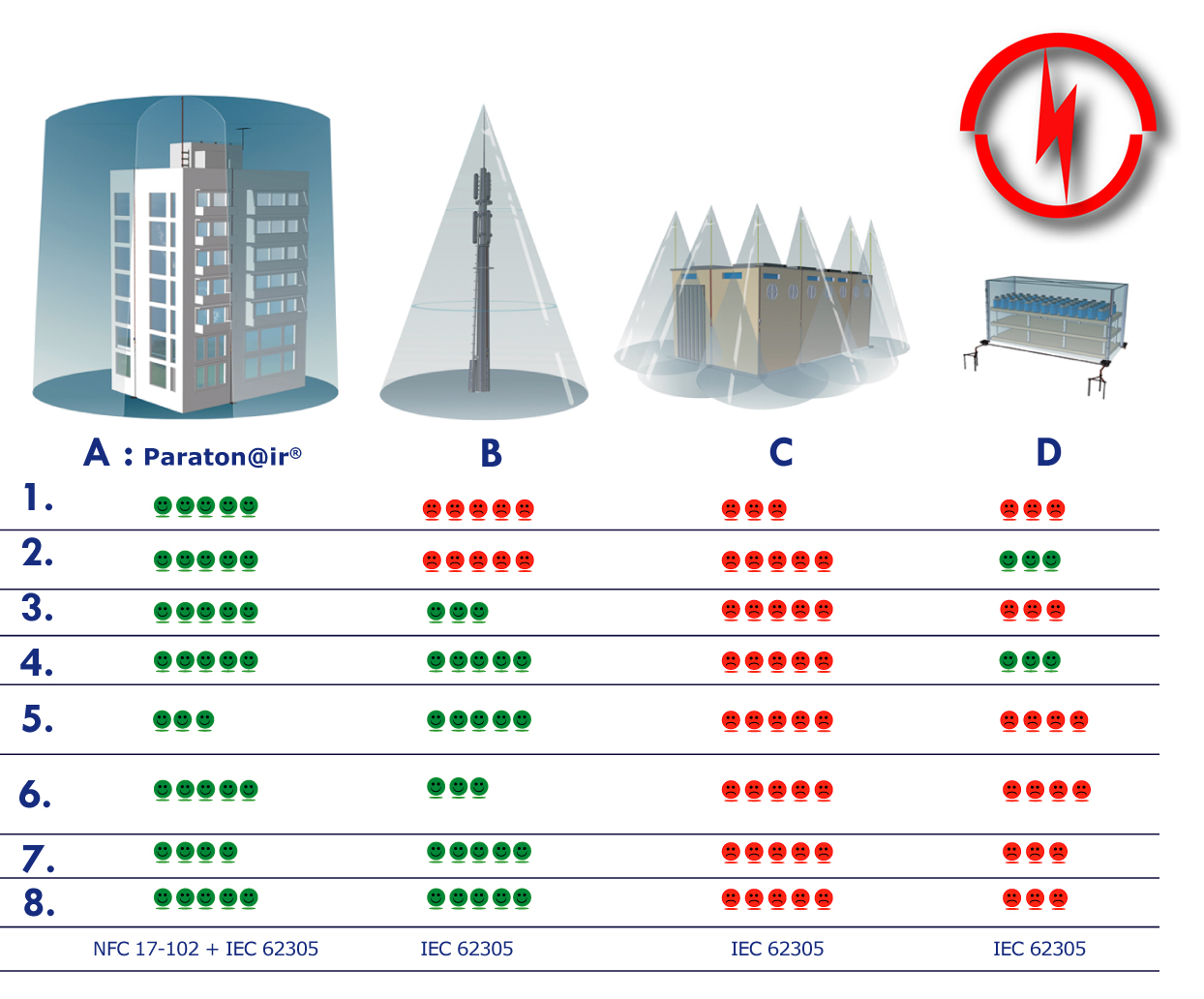
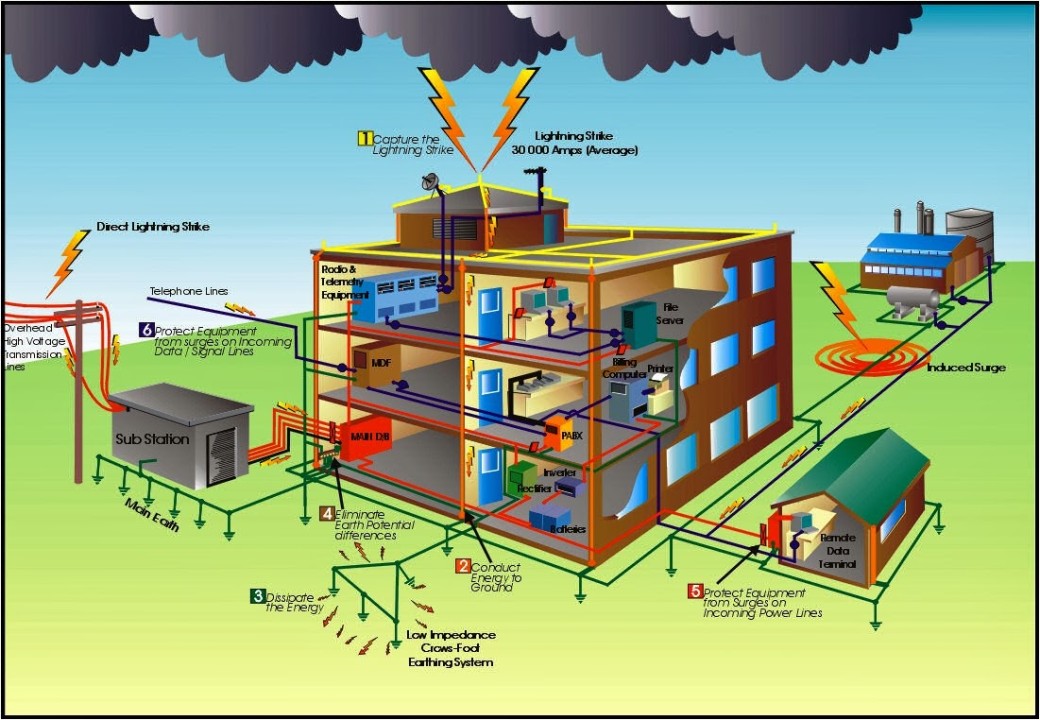
Image Lightning Desc Error

Lightning Desc


Lightning Desc is a field for recording a description of a lightning event, including date & time, location, type, estimated current, and impact, used to track and prevent future lightning hazards.

Read More
Image Lightning Protection Error

Lightning Protection


A lightning conductor protects a structure from direct lightning strikes. The conductor is installed externally at the highest point of the structure and serves to intercept strikes that might hit it directly.

Read More
Image Standard Lightning Protection Error

Standard Lightning Protection


Engineering standards for lightning protection systems: Thailand EIT (2003-51 / 2003-64, TIS 1588) and French NF C 17-102:2011 for Early Streamer Emission (ESE) air terminals by LPS France.

Read More

Select Language

English English
EN ✓
Thai ภาษาไทย
TH ✓
French Français
FR ✓

Select Theme

Light
Dark
System